
Could Imposter Syndrome be your leadership superpower?
Ever felt like you don’t belong in the room?
Imposter syndrome is usually seen as a flaw—a sign of insecurity or inadequacy; it shows up in coaching conversations frequently. I often recall a meeting with a group of people who had applied to, and successfully secured places on, an organisational talent programme. Despite clearly being there on merit each person recounted how they didn't feel worthy of their place.
What would happen if that creeping doubt wasn't a weakness but a sign that you’re growing? Instead of “not being enough” when you are stretching beyond your comfort zone what if it's a sign of personal growth? Could recognising that feeling of being an imposter become an asset?
The positives of Imposter Syndrome
The best leaders aren't those who never doubt themselves. Instead of this weighing them down they harness and embrace it. For example:
Leaders who question themselves tend to seek feedback and remain open to learning. This humility fosters psychological safety and better decision-making.
It is a powerful motivator to learn, adapt, and improve - all qualities essential for thriving in today’s fast-changing world.
The chances are it arises when you either doing, or thinking about doing, something new, challenging, and meaningful. Isn't that what leaders are here for, rather than maintaining the status quo?
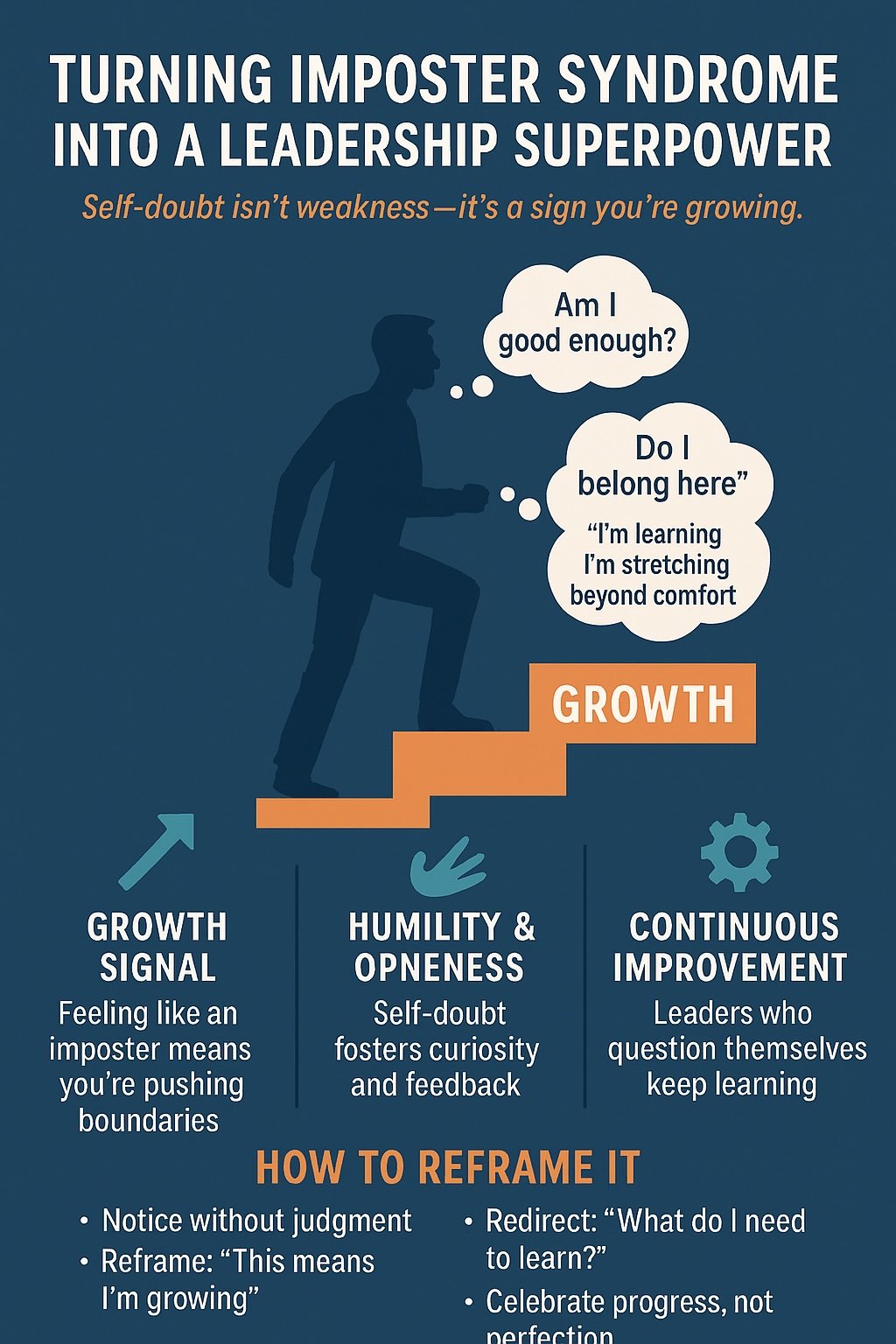
Reframing that feeling of being an imposter
When you signs doubt starting to surface why not try a quick reframe:
Switch the narrative: Instead of “I’m not good enough,” try “I’m growing into this role.”
Redirect your energy: Ask yourself, “What skills or knowledge will help me thrive?”
Celebrate your growth: Focus on learning and improvement, not perfection.
Have you turned imposter syndrome into a leadership advantage? How did it change your approach? Please comment and leave your thoughts below.